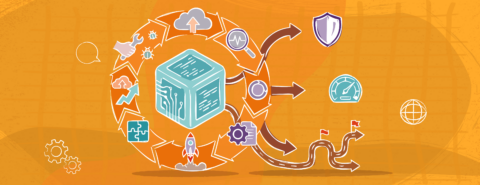




Customer Journey Mapping in the AI Era: How to Build a Modern Customer Journey Map
Traditional customer journey mapping still helps companies understand customer needs, behaviors, and the problems people encounter when interacting with a brand. Today, however, the map needs to cover far more than a website visit, checkout, and a conversation with customer service.
Customers move constantly between online and offline channels. They use apps, physical stores, comparison sites, social media, search engines, and generative AI tools. They may start their research in ChatGPT, review an offer on their phone, visit a store, speak to a sales representative, and complete the purchase later on a laptop.
A company that examines only one part of this journey never sees the full customer experience. It may continue optimizing individual channels while still losing customers along the way.
Customer journey mapping brings these fragmented interactions into a single view. It shows what customers need at each stage, what makes it harder for them to move forward, and which improvements are most likely to create business value.
Key Takeaways:
- A customer journey map covers the full customer experience, from the initial need through evaluation and purchase to support and loyalty.
- A modern map should include online and offline channels, customer emotions, data, internal processes, and new AI-related touchpoints.
- Many problems arise not within individual channels, but when customers move between a website, app, physical store, sales team, and customer service.
- Customer journey mapping helps identify friction, understand where conversion is lost, and decide which improvements should come first.
- AI can influence brand discovery, offer comparison, decision-making, and post-purchase support.
- The map should lead to a practical roadmap covering UX, content, processes, data, and technology.
What Is Customer Journey Mapping?
Customer journey mapping is the process of visualizing the customer’s experience across every stage of their relationship with a company. The map shows what customers do, what they need, which questions they ask, how they feel, and what may prevent them from taking the next step.
It is much more than a diagram of the pages someone visits while shopping. A well-designed customer journey map also includes:
- customer goals and needs,
- actions and decisions,
- emotions and level of engagement,
- online and offline touchpoints,
- sources of information,
- friction points and moments of uncertainty,
- internal processes,
- data and systems supporting the experience,
- business metrics,
- opportunities for improvement.
The map helps the company view the process from the customer’s perspective rather than through its own organizational structure. To the customer, marketing, sales, e-commerce, logistics, and post-purchase support are all part of the same brand. They do not care which department owns a particular problem.
Effective customer journey mapping requires collaboration across business, technology, marketing, sales, and customer service teams.
Example: The Brand the Customer Never Saw
In July, Marek spent a weekend in the Bieszczady Mountains. He went horseback riding, sat around the campfire in the evenings, and met several people with whom he quickly found common ground. On the final evening, he noticed that one of his new friends was wearing leather cowboy boots. They were not mass-produced fashion boots from a chain store, but well-made, hand-stitched boots crafted from quality leather.
Marek returned to Warsaw with a simple goal: to buy his first pair.
On Monday evening, however, he did not search Google for “Polish leather cowboy boots.” Instead, he opened ChatGPT and asked:
“Recommend Polish brands that make handcrafted leather cowboy boots for men, with a budget of up to PLN 2,000.”
He received three recommendations, along with a short comparison and links to their online stores.
None of them led to Lone Star Boots.
Why Does a Brand Disappear from the New Customer Journey?
Lone Star Boots is a fictional but representative Polish craft brand. It uses quality leather, makes its products by hand, and sells boots priced between PLN 800 and PLN 2,500. Its positioning is clear: premium quality, local production, and products for customers looking for something beyond the mass market.
For several years, sales grew steadily. Some customers returned for additional styles, while new ones arrived through Google Ads, Instagram, SEO, and referrals.
Then the number of new customers began to fall.
The product had not changed. Neither had the price. The marketing budget remained similar, and competitors did not appear to have introduced any major innovations.
What had changed was the starting point of the customer journey. Today, that journey does not always begin with a search engine or an advertisement. Increasingly, it begins with a conversation with AI.
Why Is a Traditional Customer Journey Map No Longer Enough?
A traditional customer journey map usually includes five stages:
- awareness of a need,
- consideration of available options,
- decision-making,
- purchase or use of a service,
- support, loyalty, and repeat purchase.
This model still captures the core stages of the customer journey. What has changed is how people move between them, as they now rely on a wider range of channels, touchpoints, and sources of information.
A customer may discover a product in a creator’s video, ask AI for alternatives, read reviews on an external platform, visit a physical store, and then place the order through an app. After the purchase, they may look for answers in a search engine, knowledge base, chatbot, or third-party AI tool.
Problems arise when a company analyzes these channels separately. Marketing focuses on reach and traffic, e-commerce on conversion, customer service on ticket volume, and IT on system performance. No one looks at whether the journey feels consistent from the customer’s perspective.
That is why modern customer journey mapping needs to connect user experience, processes, data, and technology.
How Is AI Changing the Customer Journey?
Generative AI is becoming one of the main ways people search for, compare, and organize information. According to DataReportal, generative AI tools had 2.42 billion active users in April 2026, more than twice as many as 12 months earlier.
Search behavior is changing as well. A 2024 study by SparkToro and Datos found that, for every 1,000 Google searches in the European Union, only 374 clicks led to the open web. In the United States, the figure was 360. Gartner also predicted that traditional search volume would fall by 25% by 2026 as AI chatbots and virtual agents took over a growing share of queries.
This does not mean that traditional SEO is becoming irrelevant. It does mean that search engines are no longer the only place where brands compete for visibility.
A brand needs to appear not only in search results, but also in the answers AI generates from the sources available to it.
How Does AI Shape Each Stage of the Customer Journey?
An AI-enabled customer journey still follows the same core stages as a traditional one. Each stage, however, now includes an additional layer involving LLM responses, AI recommendations, data analysis, automation, and digital agents.
1. How Do Customers Discover Brands in LLM Responses?
Customers do not always begin with Google. They may ask ChatGPT, Perplexity, Gemini, Claude, or Copilot to recommend brands, products, or vendors.
At this point, AI creates a shortlist. A brand that does not appear on it may never enter the customer’s consideration set.
Example queries include:
- “Which PIM system should a retailer choose?”
- “What is the best B2B e-commerce platform for a manufacturer?”
- “Which Polish packaging manufacturers handle large orders?”
- “Where can I buy well-made, handcrafted leather boots?”
- “Which company implements omnichannel solutions for retailers?”
2. How Do Customers Compare Offers with AI?
Customers no longer need to open a dozen browser tabs and compare offers themselves. They can ask AI to summarize the differences, weigh the advantages and disadvantages, or recommend the best option for a specific situation.
AI builds its response from content it can find, understand, and connect.
Brand content therefore needs to be specific, well organized, and easy to reference. Useful formats include FAQs, comparisons, structured data, product descriptions, reviews, case studies, and clear information about pricing and purchasing terms.
3. How Does AI Support Purchase Decisions?
At the decision stage, AI can act as an advisor. It can help customers choose a product variant, select the right size, evaluate return conditions, review customer feedback, or summarize the most important differences between offers.
One sign of where the market is heading is the rise of agents that can use a browser and complete tasks on a user’s behalf. Capabilities originally introduced by OpenAI as Operator were later integrated into the ChatGPT agent. Amazon, meanwhile, is developing Buy for Me, a feature that can purchase selected products directly from an external brand’s website.
This is not yet standard across e-commerce, but it shows the direction of travel. A purchasing process should be understandable not only to the customer, but also to agents acting on their behalf.
4. How Does AI Affect Product Use and Post-Purchase Support?
After making a purchase, customers may use AI to check an order status, find instructions, choose accessories, or solve a problem without contacting a representative.
When a company has well-organized data, a strong knowledge base, and the right system integrations, AI can shorten support times and make assistance more accessible.
Without these foundations, customers encounter familiar barriers: limited support hours, incomplete FAQs, inconsistent information, and manual handling of simple questions.
5. How Can AI Support Loyalty and Anticipate Future Needs?
AI can support loyalty by anticipating what a customer may need next. It can remind them about maintenance, recommend accessories, suggest another order, or help them choose their next product.
This requires high-quality data, appropriate consent, system integration, and a clear personalization strategy. Without these foundations, AI remains an add-on rather than a meaningful driver of retention.
What Should a Customer Journey Map Include in the AI Era?
A modern customer journey map should combine the customer’s perspective with the organization’s perspective. Describing user behavior alone is not enough if the company does not understand which processes, data, and systems are shaping that experience.
Customer Needs and Goals
At each stage, the map should define what the customer is trying to achieve. Someone who is only beginning to explore a category has a different goal from a customer who has already chosen a product and is looking for reassurance before buying.
Actions
The map should reflect what customers actually do, not only what the company assumes they do. Useful sources include research, interviews, analytics, session recordings, internal search data, and insights from sales and customer service teams.
Touchpoints
The analysis should include owned, paid, and third-party channels, such as:
- the company website,
- an app,
- a physical store,
- social media,
- advertising,
- email,
- marketplaces,
- search engines,
- review platforms,
- conversations with sales representatives,
- customer service,
- chatbots and AI tools.
Emotions and Confidence
Customers may feel curious, confused, skeptical, or frustrated. Understanding these emotions helps identify moments when even a minor barrier could cause someone to abandon the journey.
Friction Points
Friction points are any issues that make it harder for the customer to move forward. They may relate to the interface, communication, data, processes, policies, logistics, or customer support.
Processes and Systems
The map should also show what is happening inside the organization. For example, outdated availability information may not be caused by the website itself, but by delayed synchronization between the ERP, warehouse system, and e-commerce platform.
In more complex projects, the customer journey map can be expanded into a service blueprint. This provides a more detailed view of frontstage and backstage processes, systems, teams, and responsibilities behind each touchpoint. It helps the company understand not only where the customer experiences a problem, but also what causes that friction internally.
Metrics
Each stage should be tied to measurable indicators. These may include conversion rate, time required to complete a task, abandonment rates, customer service contacts, complaints, repeat purchases, or the number of customers moving between channels.
Opportunities for Improvement
The map should conclude with a list of hypotheses and possible actions. Not every improvement needs to be implemented at once. The priority is to identify which changes are most likely to improve both the customer experience and business performance.
Where Can a Brand Lose Customers in an AI-Enabled Journey?
A brand can lose customers at several stages, even when its traditional purchasing journey appears to work well.
| Stage | What is the customer doing? | What could go wrong? | What should the company review? |
| Discovery | Looking for a solution to a problem | The brand does not appear in the channels the customer uses | Traffic sources, content, recommendations, and visibility in search and AI |
| Consideration | Asking AI to compare options | AI does not have enough specific information about the offer | Content, product data, reviews, comparisons, and case studies |
| Decision | Looking for reassurance before choosing | Clear information about pricing, delivery, returns, or specifications is missing | UX, FAQs, access to an advisor, pricing, delivery, and returns information |
| Purchase | Using the website or an AI agent | The process is too complex or difficult for automated tools to interpret | Checkout, forms, APIs, and e-commerce architecture |
| Support | Looking for help after the purchase | Answers are fragmented or require contacting several departments | Knowledge base, customer service, CRM, chatbots, and access to a representative |
| Loyalty | Considering another purchase | The company does not use data effectively for personalization | Data, consent, segmentation, personalization, and loyalty programs |
How Do You Create a Customer Journey Map Step by Step?
Creating a customer journey map requires customer insight, data, and input from multiple teams. The goal is not simply to draw the stages, but to identify where customers encounter barriers, lose confidence, or abandon the journey.
1. Define the Purpose of the Mapping Exercise
Begin by identifying the problem the map is intended to solve.
Possible objectives include:
- reducing cart abandonment,
- improving conversion,
- reducing the number of questions sent to customer service,
- creating a more consistent omnichannel experience,
- designing a new service,
- improving retention,
- identifying where AI could add value.
Without a clear objective, the map may quickly become a large and detailed document that offers little guidance on priorities.
2. Collect Qualitative and Quantitative Data
A customer journey map should not be created solely during an internal workshop. Employee insights are valuable, but they cannot replace information gathered from customers.
The analysis may draw on:
- customer interviews and research,
- surveys,
- usability testing,
- analytics data,
- session recordings,
- internal search queries,
- sales conversations,
- customer support tickets,
- reviews,
- reasons for returns and complaints.
This ensures that the map reflects real behavior rather than internal assumptions.
3. Map the Entire Journey from Beginning to End
The analysis should not begin only when someone arrives on the company website. It should go back to the moment when the customer first recognizes a need or starts looking for a solution.
The next step is to trace the full journey, including what happens after the purchase. This reveals the connections between marketing, sales, fulfillment, logistics, and support.
4. Identify Friction Points
At each touchpoint, review:
- what the customer expects,
- what information they receive,
- what is missing,
- what may create uncertainty,
- how much effort the task requires,
- what could cause them to abandon the process.
Pay particular attention to transitions between channels. This is often where saved information disappears, terms change, or customers are forced to explain their situation again.
5. Add an AI Layer
The AI layer in customer journey mapping should cover two areas.
The first is customer behavior. The company should determine whether people use generative AI tools to search for information, compare options, make decisions, or solve problems.
The second is the opportunity to improve the journey. AI can support search, recommendations, product selection, customer questions, personalization, and the work of service representatives.
A GEO audit, or Generative Engine Optimization audit, can complement this analysis. It shows whether a brand appears in AI-generated responses to questions asked by potential customers. It also reveals how tools such as ChatGPT, Gemini, and Perplexity describe the offer, which sources they use, and whether they recommend the brand or its competitors more often.
A GEO audit does not replace customer journey mapping. It provides additional insight into the earliest stages of the journey, particularly brand discovery and offer comparison. Visibility in AI responses alone will not solve the problem if the rest of the journey is confusing, inconsistent, or makes it difficult for the customer to decide.
6. Set Priorities
Not every problem has the same impact on customer experience or business performance. Actions should therefore be assessed against several criteria:
- the scale of the problem,
- its impact on the customer,
- its impact on conversion or retention,
- implementation cost,
- technological dependencies,
- the time required to deliver the change.
This helps distinguish quick wins from larger initiatives that require changes to processes or systems.
7. Build a Roadmap and Measure the Results
The mapping process should result in a backlog of actions with assigned owners, deadlines, and metrics.
After implementation, the company should verify whether the changes have actually improved the customer experience. A customer journey map is not a document created once every few years. It should evolve as customer behavior, the offer, available channels, and technology change.
What Are the Benefits of Customer Journey Mapping?
Customer journey mapping helps companies understand customer needs, uncover barriers in the purchasing process, and identify actions that can improve conversion, service, and loyalty. It also gives marketing, sales, UX, technology, and customer service teams a shared frame of reference.
Better Customer Understanding
The map reveals how customers actually make decisions, which channels they use, and what they need at each stage.
Higher Conversion
Identifying friction helps remove barriers that prevent customers from making a purchase, registering, submitting an inquiry, or using a service.
A More Consistent Experience
Customer journey mapping highlights problems between channels and departments. This makes it possible to design a more consistent experience across online, offline, and customer service interactions.
Better Investment Decisions
The map makes it easier to assess which projects have the greatest business potential. The organization can distinguish genuine customer needs from ideas that do not solve an important problem.
More Effective Cross-Functional Collaboration
Marketing, sales, e-commerce, UX, customer service, and IT begin working from the same view of the customer journey. This makes it easier to assign ownership and determine the right sequence of activities.
More Purposeful Use of AI
Instead of introducing isolated tools without a clear purpose, the company can identify the moments when AI will genuinely improve the experience, accelerate a process, or reduce costs.
Customer Journey Mapping Should Lead to Change
A strong customer journey map is not a presentation of an ideal process. It should reveal the problems, dependencies, and decisions the organization needs to address.
At Univio, customer journey mapping in the AI era combines expertise in CX, UX, user research, data, e-commerce, and technology. The analysis covers the full online and offline journey, friction points, lost conversion, and new touchpoints related to generative search and digital assistants. The result is a backlog of actions covering UX, content, data, processes, AI, and technology.
Would you like to understand what your customers’ journey really looks like? Contact a Univio expert. Together, we can identify the most important friction points, set priorities, and build a roadmap that connects customer needs with business goals.
Below, we answer some of the most common questions about customer journey mapping.
FAQ
What is a Customer Journey Map?
A customer journey map is a visual representation of the customer’s journey from the initial need through evaluation and purchase to post-purchase support and loyalty. It shows actions, needs, emotions, touchpoints, and barriers at each stage.
What Are the Main Stages of the Customer Journey?
The most common stages are awareness of a need, consideration of available options, decision-making, purchase, post-purchase support, and loyalty. The exact number of stages depends on the business model and the process being analyzed.
Does a Customer Journey Map Cover Only the Website?
No. It should include all relevant online and offline channels, including apps, physical stores, sales interactions, customer service, social media, search engines, third-party platforms, and AI tools.
How Does AI Affect the Customer Journey?
AI can influence brand discovery, offer comparison, product selection, purchasing decisions, post-purchase support, and personalization. It can serve both as a customer touchpoint and as a technology supporting selected stages of the journey.
How Does a GEO Audit Relate to Customer Journey Mapping?
A GEO audit helps determine whether a brand is visible and accurately represented in AI-generated responses. Within customer journey mapping, it provides insight into the earliest stages of the journey, particularly brand discovery and offer comparison.
References
- DataReportal – Digital 2026 Mid-Year Global Update Report
- SparkToro / Datos – 2024 Zero-Click Search Study by Rand Fishkin
- Orbit Media Studios – AI Search Adoption Survey 2026
- Gartner – Search Engine Volume Drop 25% by 2026
- Similarweb – Generative AI Statistics 2026
- OneLittleWeb – AI Chatbots vs. Search Engines: 24-Month Study